

Concerned About Tophaceous Gout?

Explore Tophaceous Gout Clinical Trials

Tophaceous gout is a form of chronic gout characterized by the buildup of urate crystals under the skin, forming nodules called tophi. These deposits can cause joint pain, swelling, stiffness, and reduced mobility. Tophaceous gout is associated with recurrent flares and long-term joint damage if left untreated.

Revive Research Institute is conducting tophaceous gout clinical trials to evaluate potential treatment options. hese studies aim to assess the safety and efficacy of investigational therapies for tophaceous gout. If you are in Michigan, you may be eligible to participate in a tophaceous gout clinical trial in Michigan.

Are You Eligible to Participate?

To be eligible for our clinical trial for tophaceous gout, individuals must meet the following criteria:

  • Male or female between 18 to 75 years of age
  • Have been diagnosed with gout for at least 1 year

*Additional criteria may apply

Participants may receive study-related care, medication, and regular health monitoring from the research team.

This field is for validation purposes and should be left unchanged.
Who is this information for?*(Required)

Please provide YOUR contact information only.

Name(Required)
Best Time to Call(Required)
User Agreement(Required)
For more info, please visit Privacy Policy.
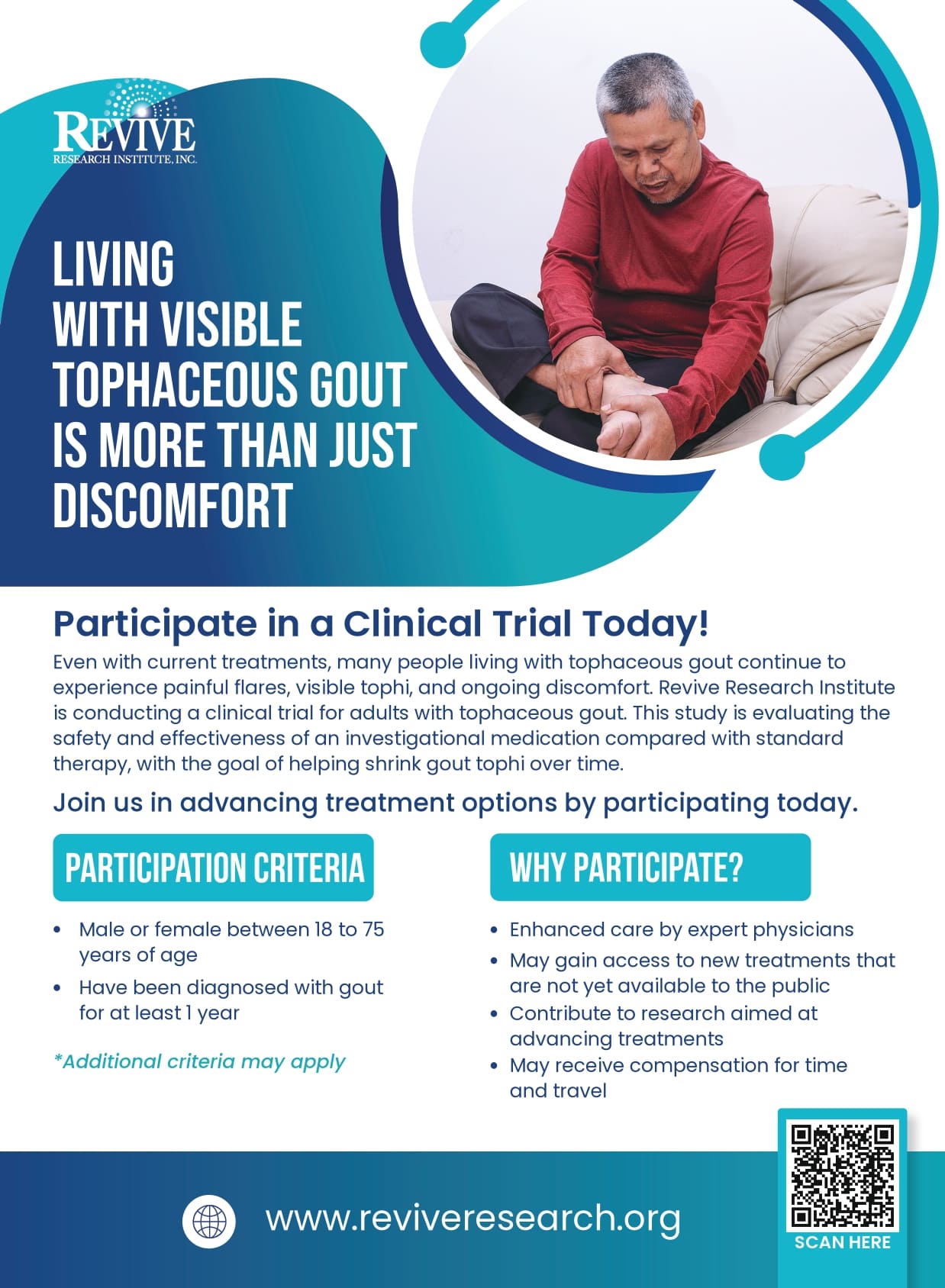
Tophaceous Gout Clinical Trials Flyer

About the Clinical Trials for Tophaceous Gout

Tophaceous gout results from long-standing hyperuricemia, which leads to monosodium urate crystal deposition in joints and soft tissue. The condition can cause chronic pain, joint deformity, and decreased quality of life.

Revive Research Institute is conducting clinical trials to evaluate investigational treatment options for tophaceous gout. These studies aim to evaluate the safety and effectiveness of investigational treatments for tophaceous gout.

All study-related care, including medical evaluations, lab tests, and investigational medication is provided at no cost, and insurance is not required. Eligible participants may also receive reimbursement for time and travel.

If you’re interested in learning more, complete the form above, and a member of our research team will contact you to discuss your eligibility. A brief conversation about your health and medical history will help determine if a clinical trial may be right for you.

Get Started: What to Expect?

If you are living with tophaceous gout, you may qualify for a clinical trial evaluating an investigational treatment for tophaceous gout. After completing the interest form above, a research team member will contact you for a brief pre-screening to review your health history and determine eligibility.

If you appear eligible, you’ll be invited to a screening visit at our clinical research site. During this visit, medical staff will review your history, perform basic exams, and run lab tests to confirm eligibility. Before any procedures begin, you’ll be asked to review and sign an Informed Consent Form (ICF) outlining the study’s purpose, procedures, and potential risks and benefits.

Our team ensures you fully understand your role in the study and what to expect throughout participation. You are encouraged to ask questions at any stage. Your participation contributes to ongoing clinical research in tophaceous gout.

Age

18 to 75 years of age

Condition

Tophaceous Gout

Location

Michigan

Understanding Tophaceous Gout

Tophaceous Gout Clinical Trials

Tophaceous gout is caused by chronic hyperuricemia, which leads to the formation of urate crystals in joints, cartilage, and soft tissue. These crystals provoke inflammation, pain, and joint damage over time.

Causes of Tophaceous Gout

Risks and Symptoms of Tophaceous Gout

  • Formation of visible or palpable tophi in joints and soft tissue
  • Recurrent, painful gout flares
  • Joint stiffness and reduced mobility
  • Risk of chronic joint damage and deformity

Currently, treatments focus on lowering uric acid levels through medication, but not all patients achieve sufficient urate reduction, which is why participation in tophaceous gout clinical trials is essential for developing new therapies.

Frequently Asked Questions (FAQs)

Your Guide to Common Questions

We’ve gathered answers to some of the most common questions about tophaceous gout, its management, and steps you can take to protect joint health.

A chronic form of gout where urate crystals accumulate under the skin, forming nodules called tophi.

Prolonged high uric acid levels in the blood, often influenced by genetics and history of gout attacks.

Diagnosis is confirmed through physical examination, imaging, and blood tests measuring uric acid levels.

Treatment focuses on lowering uric acid levels with medications. Ongoing clinical trials are evaluating investigational therapies that may more effectively reduce tophi and prevent joint damage.

Participation may provide access to investigational treatments, free expert care, and the opportunity to contribute to advancing therapy for tophaceous gout.